

Key Takeaways
- Delhi is home to several historically significant gurudwaras, many linked to Sikh Gurus and pivotal moments in Sikh history
- Gurudwara Bangla Sahib and Sis Ganj Sahib are among the most visited and iconic Sikh shrines in the city
- Several gurudwaras mark sites connected to Guru Tegh Bahadur’s martyrdom, a defining moment in Sikh history
- Most gurudwaras welcome visitors of all faiths, offering free meals through community kitchens (langar)
- These sites are conveniently located across Delhi, making it easy to combine visits with other sightseeing during your trip
Introduction
Delhi’s history is woven with stories of faith, resilience, and sacrifice, and nowhere is this more evident than in its historic gurudwaras. As one of the most significant centres of Sikh heritage outside Punjab, famous gurudwara locations in Delhi attract thousands of visitors each year, from devoted pilgrims to curious travellers exploring the city’s layered past.
Many of these shrines are directly connected to pivotal moments in Sikh history, particularly the martyrdom of Guru Tegh Bahadur, the ninth Sikh Guru, whose sacrifice in defence of religious freedom left a lasting mark on the city. Others commemorate the visits and teachings of earlier Gurus, or serve as centres of community service that continue to this day. In this guide, we’ll explore 10 of the most significant gurudwaras in New Delhi, offering insight into their history, architecture, and spiritual importance.
1. Gurudwara Bangla Sahib
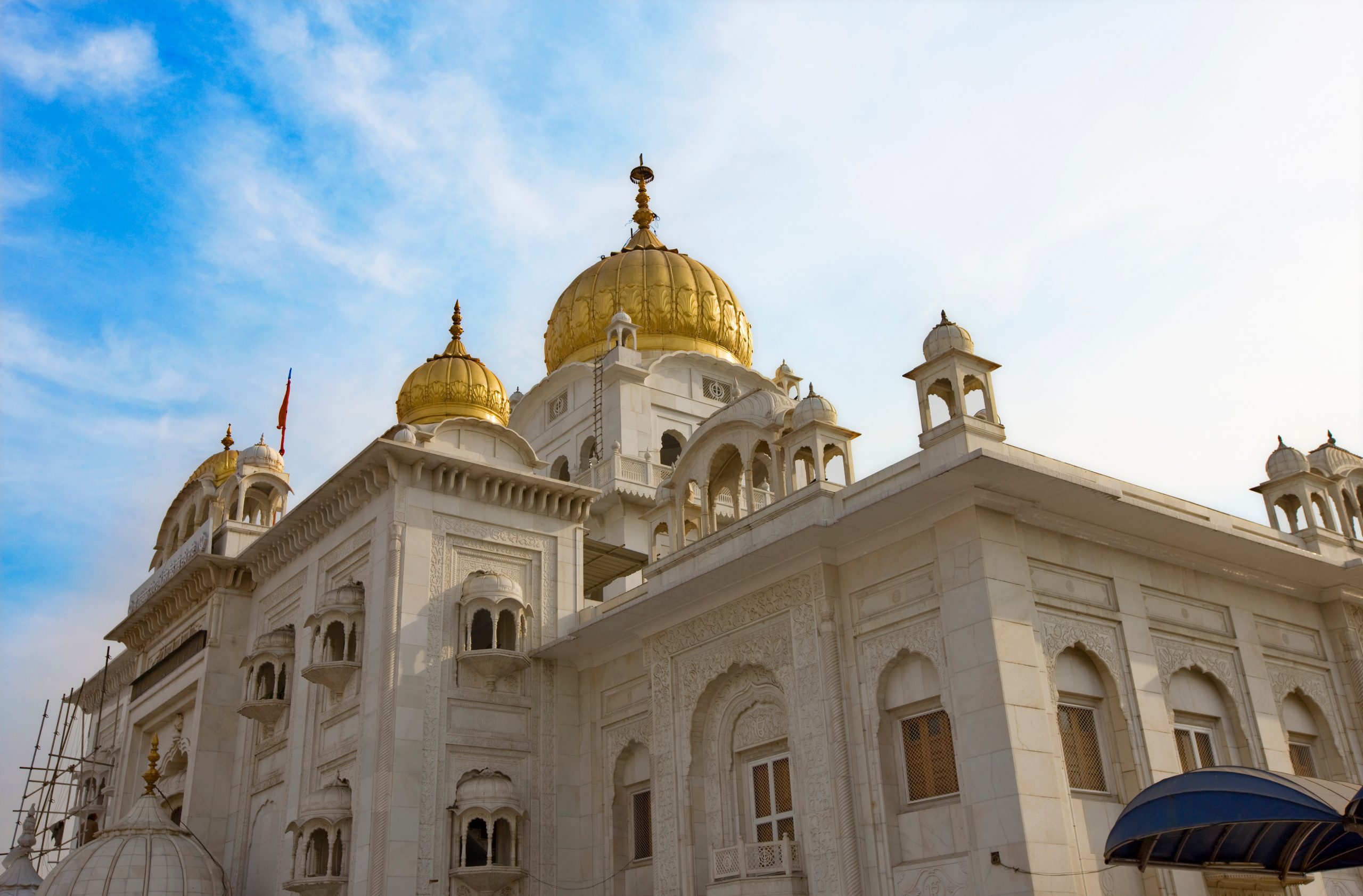
No list of gurudwaras in Delhi would be complete without starting at Gurudwara Bangla Sahib, arguably the city’s most iconic Sikh shrine. Located on Ashoka Road near Connaught Place, this stunning gurudwara, with its golden dome and expansive sarovar (holy water tank), is often considered Delhi’s biggest gurudwara in terms of visitor footfall and prominence.
Originally built as a bungalow belonging to Raja Jai Singh of Jaipur, the site holds deep significance as the place where Guru Har Krishan, the eighth Sikh Guru, resided in 1664 while helping treat those suffering from a smallpox and cholera epidemic. The sarovar’s waters are still considered sacred, believed by many to carry healing properties. Constructed in 1783 by Sikh military general Sardar Bhagel Singh, Bangla Sahib remains a must-visit for anyone exploring Delhi’s spiritual landmarks.
- Location: Ashoka Road, near Connaught Place, New Delhi — 110001
- How to Reach:
- Metro: Patel Chowk Metro Station (Yellow Line), 5 minutes walk; Rajiv Chowk Metro Station (Yellow and Blue Line), 10 minutes walk
- Bus: Multiple DTC bus routes stop at Connaught Place and Ashoka Road
- By Road: Easily accessible from Connaught Place by auto-rickshaw, taxi, or cab; well-known landmark easily locatable on Google Maps
2. Gurudwara Sis Ganj Sahib
Nestled in the bustling lanes of Chandni Chowk, Gurudwara Sis Ganj Sahib stands as one of the most historically significant sites among gurudwaras in old Delhi. This sacred shrine marks the spot where Guru Tegh Bahadur, the ninth Sikh Guru, was martyred on the orders of Mughal Emperor Aurangzeb on November 11, 1675, after refusing to convert to Islam.
Built in 1783 by Sardar Bhagel Singh, the gurudwara preserves poignant historical elements, including the well where Guru Tegh Bahadur bathed during his imprisonment and the trunk of the tree under which he was executed. Its location amid the vibrant chaos of Old Delhi’s markets makes it a particularly moving stop, offering a quiet spiritual sanctuary within one of the city’s busiest commercial districts.
- Location: Chandni Chowk Road, opposite Kotwali, Chandni Chowk, Old Delhi, 110006
- How to Reach:
- Metro: Chandni Chowk Metro Station (Yellow Line), 5 minutes walk directly from the station exit
- Bus: Multiple DTC bus routes serve the Chandni Chowk area; alight at Chandni Chowk bus stop
- By Road: Accessible by auto-rickshaw or cycle-rickshaw from Old Delhi Railway Station (approximately 1 km); taxi and cab services drop to Chandni Chowk intersection; note that the area has vehicle restrictions, walking from Chandni Chowk Metro is the most convenient approach
3. Gurudwara Rakab Ganj Sahib
Located near Parliament House, Gurudwara Rakab Ganj Sahib holds profound significance as the cremation site of Guru Tegh Bahadur’s body following his martyrdom. According to historical accounts, two devoted followers, Bhai Lakhi Shah Banjara and his son, retrieved the Guru’s headless body and cremated it at their own home, an act of extraordinary courage given the circumstances, later giving rise to this sacred site.
Constructed in 1783 at a considerable cost for its time, the gurudwara is notably open on all four sides, symbolising its welcome to people of every caste, creed, and religion. This architectural choice reflects the inclusive spirit central to Sikh teachings, making it a particularly meaningful stop for visitors interested in the deeper philosophical foundations of the faith.
- Location: Rakab Ganj Road, near Parliament House, New Delhi, 110001
- How to Reach:
- Metro: Udyog Bhawan Metro Station (Yellow Line), 10 minutes walk; Patel Chowk Metro Station (Yellow Line), 12 minutes walk
- Bus: DTC buses serving Parliament Street and Sansad Marg stop close by
- By Road: Located directly on Rakab Ganj Road adjacent to Parliament House, well known to all auto-rickshaw and taxi drivers in central Delhi; easily accessible from Connaught Place in under 10 minutes by road
4. Gurudwara Mata Sundri
Located near Mandi House, Gurudwara Mata Sundri honours Mata Sundri Ji, the wife of Guru Gobind Singh, the tenth Sikh Guru. Following her husband’s passing, Mata Sundri Ji dedicated over four decades of her life to guiding and supporting the Sikh community, playing a crucial leadership role during a particularly turbulent period in Sikh history.
The gurudwara marks the site where she spent her final years and eventually breathed her last in 1747. Today, it stands as a tribute to her enduring legacy of resilience and leadership, offering visitors insight into the often-overlooked contributions of women in shaping Sikh history and community structure during this formative era.
- Location: Mata Sundri Road, near Mandi House, New Delhi, 110002
- How to Reach:
- Metro: Mandi House Metro Station (Blue and Violet Line), 8 minutes walk along Mata Sundri Road
- Bus: DTC buses serving ITO and Mandi House area stop nearby; alight at Mata Sundri Road bus stop
- By Road: Located on Mata Sundri Road, a well-known central Delhi road easily accessible by auto-rickshaw or taxi from ITO, Connaught Place, or India Gate; approximately 2 km from India Gate
5. Gurudwara Bala Sahib
Situated in Hari Nagar Ashram, Gurudwara Bala Sahib holds a distinct place among Delhi’s historical Sikh shrines. While less frequently visited by tourists compared to Bangla Sahib or Sis Ganj Sahib, this gurudwara carries its own historical weight, connected to significant events within Sikh tradition.
Its relatively quieter atmosphere offers visitors a more contemplative experience, away from the larger crowds typically found at Delhi’s more prominent shrines. For those seeking a deeper, more reflective visit to explore Sikh heritage without the bustling energy of central Delhi’s more popular sites, Gurudwara Bala Sahib provides a peaceful alternative worth including in a broader gurudwara tour.
- Location: Hari Nagar Ashram, near Bhogal, South Delhi, 110014
- How to Reach:
- Metro: Jangpura Metro Station (Violet Line), approximately 10 minutes walk; Lajpat Nagar Metro Station (Violet Line), accessible by auto-rickshaw in 10 minutes
- Bus: DTC buses serving the Bhogal and Hari Nagar Ashram area stop nearby
- By Road: Located in Hari Nagar Ashram, accessible by auto-rickshaw from Nizamuddin Railway Station (approximately 2 km) or from Lajpat Nagar market; taxi and cab services reach the area easily
6. Gurudwara Moti Bagh Sahib
Located in the Moti Bagh area, this gurudwara holds historical significance within Delhi’s broader network of Sikh heritage sites. Like several other gurudwaras on this list, it forms part of the interconnected historical narrative that traces key moments and figures throughout Sikh history in the capital.
While it may not draw the same crowds as some of Delhi’s more famous shrines, Gurudwara Moti Bagh Sahib remains an important part of understanding the full scope of Sikh presence and history across the city, offering visitors another meaningful stop for those looking to explore beyond the most well-known landmarks.
- Location: Moti Bagh, South West Delhi, 110021
- How to Reach:
- Metro: Bhikaji Cama Place Metro Station (Pink Line), approximately 10 minutes walk; Munirka Metro Station (Yellow Line), accessible by auto-rickshaw in 10 minutes
- Bus: DTC buses serving the Moti Bagh and R.K. Puram area stop in the vicinity
- By Road: Located in Moti Bagh, accessible by auto-rickshaw or taxi from South Delhi’s Ring Road corridor; approximately 5 km from Connaught Place via Shankar Road
7. Gurudwara Damdama Sahib
Located in Nizamuddin East, Gurudwara Damdama Sahib is another significant addition to Delhi’s collection of historical Sikh shrines. Its location within this culturally rich part of the city places it alongside other important heritage sites, making it a worthwhile stop for those exploring the broader historical fabric of this Delhi neighborhood.
As with several other historical gurudwaras in the city, Damdama Sahib contributes to the layered story of Sikh presence in Delhi, offering visitors another opportunity to connect with the community’s history and spiritual traditions within a slightly quieter, less commercially crowded setting.
- Location: Nizamuddin East, near Humayun’s Tomb, New Delhi, 110013
- How to Reach:
- Metro: Hazrat Nizamuddin Metro Station (Pink Line), approximately 10 minutes walk
- Bus: DTC buses serving the Nizamuddin area stop nearby; alight at Nizamuddin East bus stop
- By Road: Located in Nizamuddin East, easily accessible by auto-rickshaw or taxi from India Gate (approximately 4 km), Humayun’s Tomb (approximately 1 km), or Nizamuddin Railway Station (approximately 1.5 km)
8. Gurudwara Majnu Ka Tilla
Situated near the Yamuna River, Gurudwara Majnu Ka Tilla holds a unique place among Delhi’s Sikh heritage sites. This gurudwara has long served as a spiritual and community hub, particularly significant to the Tibetan refugee community that settled nearby, creating an interesting cultural intersection in this part of the city.
Its riverside location adds a distinct, tranquil atmosphere compared to some of Delhi’s more centrally located gurudwaras. Visitors exploring this area often combine their trip with a walk through the adjacent Tibetan colony, making it a culturally rich stop that offers more than just religious significance alone.
- Location: Majnu Ka Tilla, near Yamuna River, North Delhi, 110054
- How to Reach:
- Metro: Vidhan Sabha Metro Station (Yellow Line), approximately 15 minutes walk; alternatively, Vishwavidyalaya Metro Station (Yellow Line), accessible by auto-rickshaw in 10 minutes
- Bus: DTC buses serving the GTB Nagar and Majnu Ka Tilla area stop nearby
- By Road: Located on the western bank of the Yamuna off the Outer Ring Road, accessible by auto-rickshaw from GTB Nagar Metro Station or Civil Lines; taxi and cab services reach the area easily; approximately 8 km from Connaught Place via Ring Road
9. Gurudwara Nanak Piao Sahib
Located in Rana Pratap Bagh in North Delhi, Gurudwara Nanak Piao Sahib holds special significance as it commemorates Guru Nanak Dev, the founder of Sikhism. The site is believed to mark a location associated with the first Guru’s presence in Delhi, making it an important pilgrimage stop for those tracing the earliest roots of Sikh history in the city.
As one of the lesser-known but historically important sites, this gurudwara offers a more intimate, less crowded experience for visitors specifically interested in connecting with the earliest chapters of Sikh spiritual history within Delhi’s landscape.
- Location: Rana Pratap Bagh, North Delhi, 110007
- How to Reach:
- Metro: Pratap Nagar Metro Station (Green Line), approximately 10 minutes walk; Inderlok Metro Station (Green Line), accessible by auto-rickshaw in 10 minutes
- Bus: DTC buses serving the Rana Pratap Bagh and Shakti Nagar area stop nearby
- By Road: Located in Rana Pratap Bagh, accessible by auto-rickshaw from Ashram Road or Ring Road; approximately 7 km from Connaught Place via Shamnath Marg and Ring Road; taxi and cab services reach the area easily
10. Gurudwara Baba Banda Singh Bahadur
Located in Mehrauli Village, this gurudwara honours Baba Banda Singh Bahadur, a significant military commander in Sikh history known for his role in defending Sikh communities during a particularly challenging period. His legacy of leadership and sacrifice continues to be commemorated at this site.
Situated in the historically rich Mehrauli area, this gurudwara offers visitors an opportunity to explore Sikh military and spiritual history within a neighbourhood already known for its other significant historical monuments, making it a meaningful addition to a broader day of heritage exploration in this part of Delhi.
- Location: Mehrauli Village, near Qutub Minar, South Delhi, 110030
- How to Reach:
- Metro: Qutub Minar Metro Station (Yellow Line), approximately 15 minutes walk through Mehrauli Village; auto-rickshaws available from the station
- Bus: DTC buses serving the Mehrauli and Qutub Minar area stop nearby; alight at Mehrauli Village bus stop
- By Road: Located in Mehrauli Village, easily accessible by auto-rickshaw or taxi from Qutub Minar (approximately 1 km); approximately 15 km from Connaught Place via Aurobindo Marg; well known to all cab and taxi drivers serving South Delhi’s heritage circuit
Tips for Visiting Gurudwaras in Delhi
Whether you’re visiting for spiritual reasons or historical interest, keep these practical tips in mind when exploring gurudwara near Delhi locations:
- Cover your head before entering any gurudwara premises, head coverings are available at most entrances if needed
- Remove your shoes before entering the main prayer hall, as is customary
- Dress modestly, covering shoulders and knees out of respect for the sacred space
- Participate in langar if invited, the free community kitchen meal is open to all visitors regardless of faith
- Maintain a respectful, quiet demeanour, particularly within prayer halls and during ongoing ceremonies
These simple courtesies help ensure a respectful, meaningful visit while honouring the traditions upheld at each of these sacred sites.
Read Also – Best Places to Visit Near Connaught Place, Delhi
Where to Stay While Exploring Delhi’s Gurudwaras
Given how spread out these historical sites are across the city, from Old Delhi’s Sis Ganj Sahib to the riverside calm of Majnu Ka Tilla, choosing well-located accommodation can make your gurudwara tour significantly more convenient. Staying at one of the well-connected hotels in Delhi allows easy access to both central landmarks like Bangla Sahib and Rakab Ganj Sahib, as well as slightly farther sites like Mehrauli’s Baba Banda Singh Bahadur Gurudwara, without long commutes eating into your sightseeing time.
Among Delhi’s hospitality options, Jaypee Siddharth stands out as a comfortable, centrally located choice for travellers exploring the city’s rich Sikh heritage. Situated in the heart of the capital, the hotel offers easy access to several of Delhi’s most significant gurudwaras, along with other major attractions, making it a practical base for both pilgrims and history enthusiasts. With comfortable accommodations and attentive service, Jaypee Siddharth ensures guests have a relaxing retreat to return to after a day spent exploring the city’s spiritual and historical landmarks.
Conclusion
Delhi’s historical gurudwaras offer far more than architectural beauty; they serve as living reminders of courage, sacrifice, and unwavering faith that shaped Sikh history in profound ways. From the golden splendour of Bangla Sahib to the solemn significance of Sis Ganj Sahib and Rakab Ganj Sahib, each site tells a distinct chapter of a larger story, one defined by resilience in the face of persecution and an enduring commitment to community and service.
Visiting these 10 historical gurudwara in Delhi offers travellers a unique opportunity to engage with a side of the city often overshadowed by its more commercial attractions. Whether you’re drawn by spiritual significance, architectural beauty, or historical curiosity, these shrines provide a deeply enriching experience that reveals a more reflective, meaningful side of Delhi.
By planning your visits thoughtfully, respecting local customs, and perhaps staying at a conveniently located hotel to ease your travels between sites, you can experience the full depth of Delhi’s Sikh heritage. Together, these gurudwaras, each with its own story of devotion and sacrifice, paint a powerful picture of faith’s enduring presence in India’s bustling capital.
References
- Delhi Sikh Gurdwara Management Committee (DSGMC). Historical Gurdwaras of Delhi.
- Delhi Tourism, Government of NCT of Delhi. Religious Places in Delhi.
- Ministry of Tourism, Government of India. Incredible India: Gurudwara Bangla Sahib and Sikh Heritage Sites.
- Singh, K. A History of the Sikhs, Volume 1: 1469–1838. Oxford University Press.
- Delhi Metro Rail Corporation (DMRC). Delhi Metro Network Map and Station Information.
