

Table of Contents
- Before Stepping Inside
- Rashtrapati Bhawan History: Why This Place Exists
- Architecture That Chooses Balance Over Excess
- The Mughal Gardens: A Shift in Atmosphere
- Rashtrapati Bhavan Museum Complex
- Rashtrapati Bhavan Visit Time for Public
- Rashtrapati Bhavan Entry Ticket & Ticket Price
- Change of Guard Ceremony
- What the Circuits Offer?
- Details That Often Go Unnoticed
- What Lies Nearby?
- Final Note
- FAQs
Certain buildings speak without words. Rashtrapati Bhavan, New Delhi is one of them. It does not compete for attention, nor does it attempt to impress quickly. From its position on Raisina Hill, it simply exists, watching the city change while remaining much the same.
Visitors often arrive here incidentally. Some plan it while browsing options near their hotels in Delhi, others hear about it mid-trip. What surprises most is not the size, but the stillness. This is not a place that rushes anyone. Understanding it takes time, patience, and a willingness to observe rather than consume.
Before Stepping Inside
The estate functions as the official residence of the President of India, yet selected areas are accessible to the public. Entry is structured, controlled, and intentional.
The Rashtrapati Bhavan visit time for public generally falls between 9:00 am and 4:00 pm, with access granted only through prior online booking. Due to its central position, visitors often plan this stop between other locations near their hotels in Delhi, rather than dedicating an entire day to it.
Rashtrapati Bhawan History: Why This Place Exists
The origins of Rashtrapati Bhawan history lie far from modern India. In 1911, the British administration decided to move the capital from Calcutta to Delhi. This decision reshaped the city and required a new center of authority.
Sir Edwin Lutyens was commissioned to design the residence. Construction began on Raisina Hill and progressed slowly. World events disrupted timelines, and what was intended as a short project stretched across nearly two decades.
By 1929, the building stood complete as the Viceroy’s House. After India gained independence, its identity shifted. It became Government House briefly before being renamed when India’s first President took office in 1950. Since then, Rashtrapati Bhavan, New Delhi has served as a constitutional residence rather than a symbol of control.
Architecture That Chooses Balance Over Excess
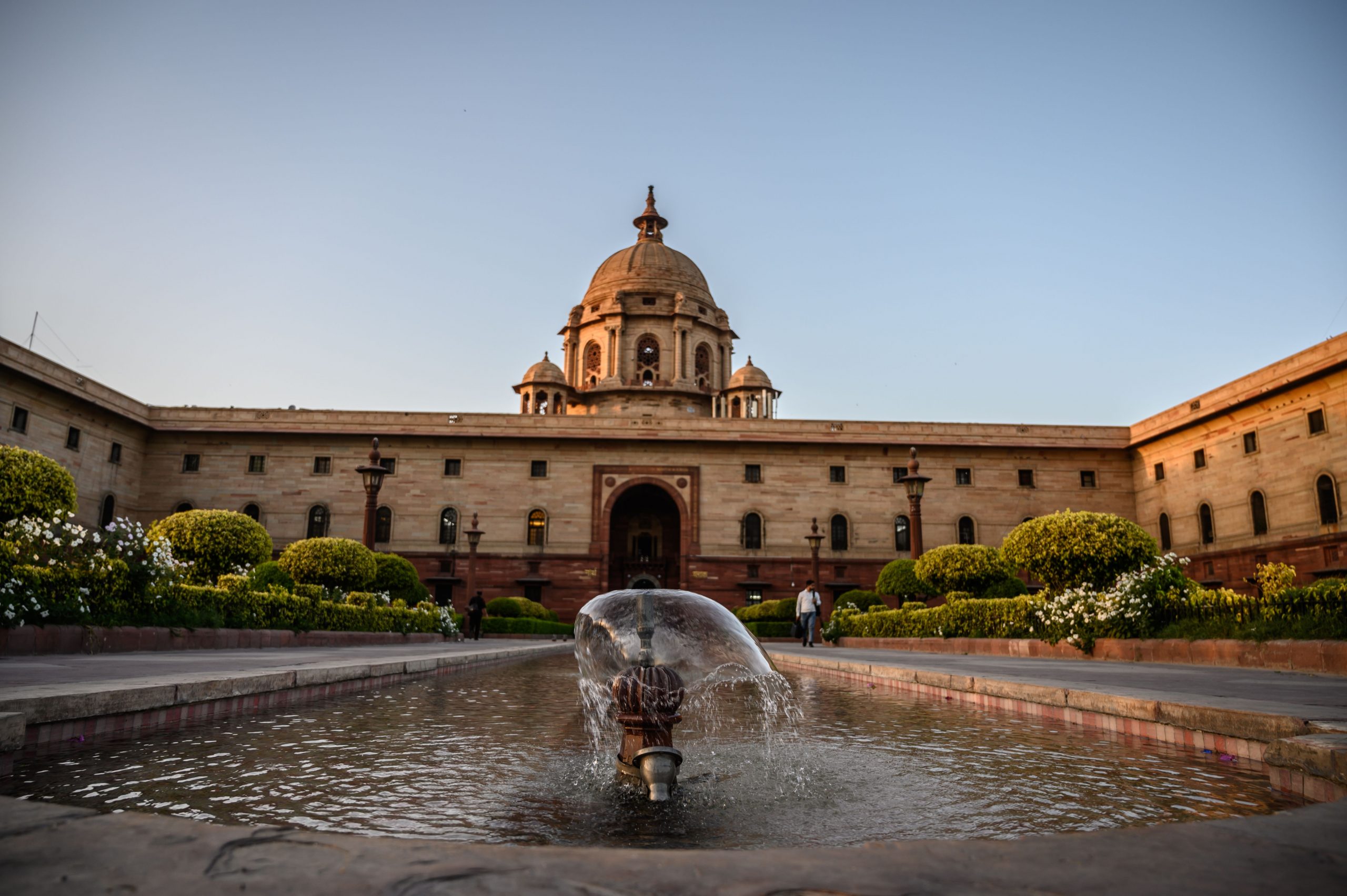
The building’s presence is undeniable, yet its design avoids extravagance. Classical European planning defines the structure, while Indian elements soften its form.
Inside are hundreds of rooms serving different purposes, like ceremonial spaces, working offices, guest areas, and private quarters. Decorative features appear sparingly. Light filters through stone screens. Corridors feel measured rather than dramatic.
The central dome rises above the structure, visible from afar. Its form suggests Western inspiration, but its proportions echo older Indian monuments. One of the least noticed details is the material choice: stone and brick dominate, while steel plays a minimal role. The result feels deliberate and enduring.
The Mughal Gardens: A Shift in Atmosphere
The experience changes once the gardens appear. The Mughal Gardens offer contrast and symmetry without rigidity, space without emptiness.
Paths divide lawns evenly. Water moves quietly through channels. Seasonal flowers appear and fade according to schedule. Roses dominate certain months, with more than 150 varieties cultivated across the grounds.
During Udyanotsav, typically between February and March, the gardens open to visitors. At this time, attention to the Rashtrapati Bhavan visiting time becomes essential, as entry slots fill quickly.
Rashtrapati Bhavan Museum Complex
The museum complex provides context without instruction. Opened in 2014, it allows visitors to understand the building through objects rather than narration.
Photographs, ceremonial items, archived records, and diplomatic gifts fill the galleries. The exhibits do not dictate interpretation. Instead, they invite reflection on how Rashtrapati Bhawan history unfolded over decades through changing leadership and national priorities.
Rashtrapati Bhavan Visit Time for Public
This visit cannot be improvised.
Public Access Window
- 9:00 am to 4:00 pm
- Online registration required
- Entry closed on gazetted holidays
Circuit Availability
- Main Building and Central Lawn: Thursday to Sunday
- Museum Complex: Closed Mondays
- Gardens: Thursday to Sunday (August to March)
Schedules may shift due to official requirements. Due to this, the Rashtrapati Bhavan visit time for public should be verified close to the planned visit.
Rashtrapati Bhavan Entry Ticket & Ticket Price
Access is divided into circuits, each requiring a separate Rashtrapati Bhavan entry ticket.
Ticket Details
- ₹50 per person for individuals or small groups
- ₹1200 per person for groups of 30
- ₹1200 plus ₹50 for each additional visitor
- No Rashtrapati Bhavan entry fee for children below eight
The Rashtrapati Bhavan ticket price remains modest, ensuring access while maintaining controlled entry.
Change of Guard Ceremony
On weekends, the forecourt hosts the Change of Guard Ceremony. Movements are precise. Music is formal. The ceremony is brief and deliberate rather than theatrical.
Attendance requires a separate booking and is not part of the standard Rashtrapati Bhavan entry ticket.
What the Circuits Offer?
Each circuit presents a different perspective.
- Main Building Circuit- Durbar Hall, Ashok Hall, Banquet Hall, central dome area, Jaipur Column
- Museum Circuit- Clock tower, former stables, repurposed garages
- Garden Circuit- Mughal Gardens, herbal sections, landscaped walkways
Together, these areas reveal how Rashtrapati Bhawan Delhi functions beyond symbolism.
Details That Often Go Unnoticed
- The Jaipur Column stands 145 feet tall.
- The main facade contains no traditional windows.
- Around 750 staff members manage daily operations.
- The library is informally known as the Daughter of the Durbar Hall.
- Several rose varieties bear the names of international figures.
Such details rarely dominate discussions but add texture to the experience.
What Lies Nearby?
Many visitors continue toward India Gate, the National Museum, Gandhi Smriti, or Gurudwara Bangla Sahib. These locations sit close enough to be combined easily, especially for those staying in central hotels in Delhi.
ALso Read : Places to Visit Near India Gate for an Unforgettable Experience in 2025
Final Note
A visit to Rashtrapati Bhavan, New Delhi does not feel performative. It feels observational. The building does not explain itself, nor does it invite haste. It allows space for thought.
With structured access, a clearly defined Rashtrapati Bhavan visit time for public, and a reasonable Rashtrapati Bhavan ticket price, the experience remains orderly without becoming mechanical. For anyone staying at nearby hotels in Delhi, it offers something uncommon- quiet insight rather than spectacle.
For travelers planning to stay nearby, Jaypee Vasant Continental Hotel and Jaypee Siddharth in New Delhi offer a comfortable base for exploring this part of the city at an unhurried pace. Their central locations make it easier to plan a morning visit to Rashtrapati Bhavan Delhi without rushing through traffic or tight schedules. Returning to a calm, well-connected hotel after spending time in such a reflective space often completes the experience, allowing the visit to settle rather than fade into the noise of the city.
