

Table of Contents
Old Delhi doesn’t prepare you for quiet. It prepares you for movement. Sound spills from every lane. People move without stopping. Then, almost suddenly, space opens up. That’s usually when people realise they have reached Jama Masjid Delhi. From outside, it feels like part of the city. Inside, it feels separate. Read this blog to learn all about Delhi’s most impressive mosque.
Reaching Jama Masjid
Most people approach Jama Masjid Chandni Chowk without marking the moment- streets narrow and shops crowd closer. Then the ground rises slightly, and the noise changes.
The Jama Masjid Delhi location sits exactly where Old Delhi feels most alive. This contrast matters. The mosque doesn’t isolate itself from the city. It absorbs it, then quiets it. This is why Jama Masjid Chandni Chowk never feels accidental. The surrounding chaos makes the stillness sharper.
The mosque stands proudly on a small hill- Bhojla Pahari. It is only a thousand yards from the Red Fort in Shahjahanabad.
About Jama Masjid
When people talk about Jama Masjid, they often begin with scale, large courtyard, tall minarets and wide steps. But scale doesn’t explain the feeling of standing there.
The mosque doesn’t rush attention. It lets the eye wander. Some visitors look up first. Others look down at the stone beneath their feet. Either way, the space decides the pace. This is often missed when reading about Jama Masjid beforehand.
History of Jama Masjid in Delhi
The history of Jama Masjid in Delhi is tied closely to ambition. It was built during a period when Mughal power felt certain. Emperor Shah Jahan wanted permanence, visibility and order.
So Jama Masjid built by Shah Jahan was designed to dominate the skyline, not just spiritually but physically. It took years, thousands of workers and materials from across regions. Yet standing there today, the history of Jama Masjid in Delhi doesn’t feel loud. It feels settled and almost finished speaking.
Architecture That Holds the Space Together
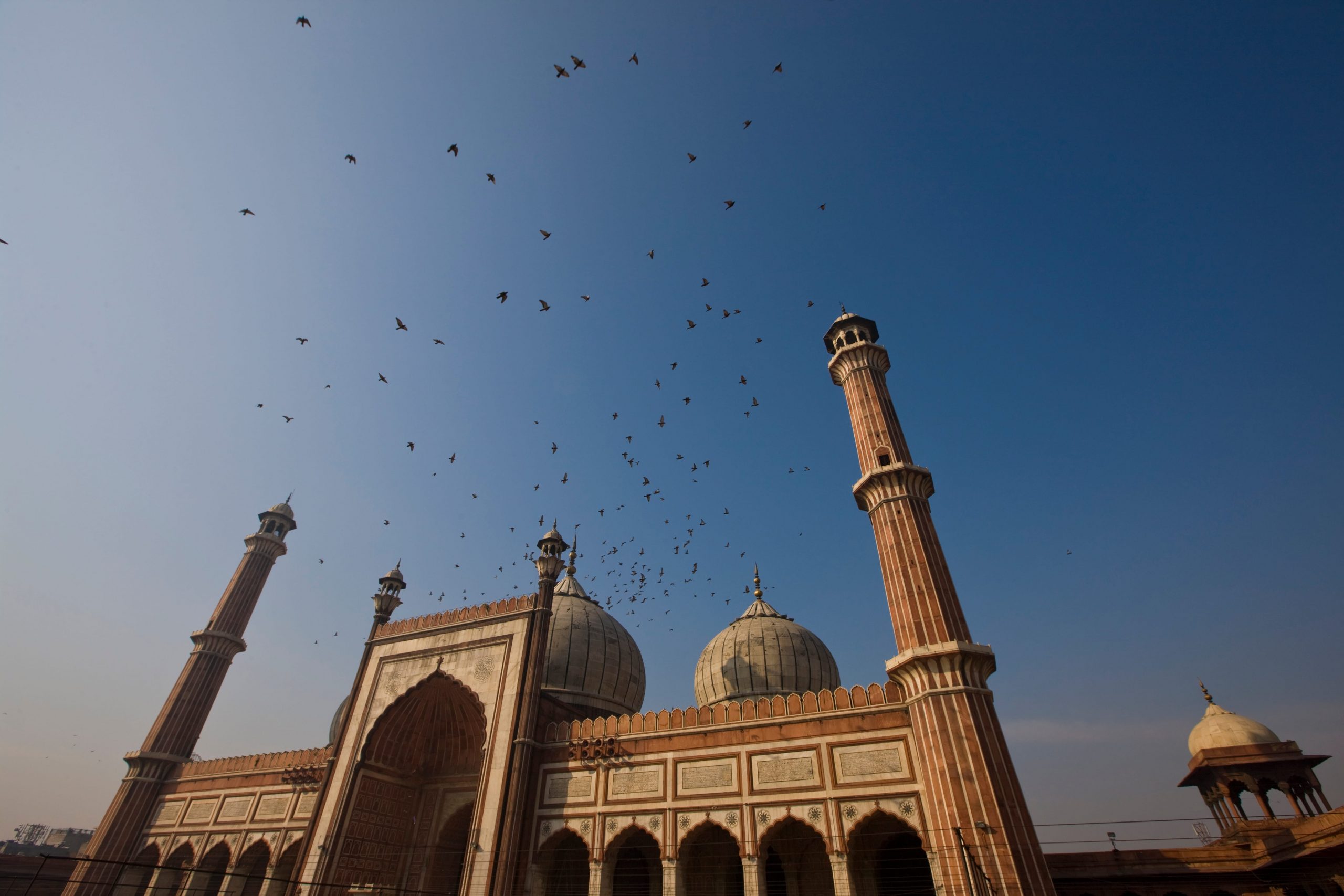
People often photograph details, but the strength of Jama Masjid Delhi architecture lies in how everything holds together. Red sandstone doesn’t overpower marble. Arches don’t compete with open space.
The domes pull attention upward gently. The courtyard holds it steady. This balance is why Jama Masjid Delhi architecture doesn’t feel decorative. It feels intentional.
Namaz Times
Prayer doesn’t interrupt the mosque. It defines it. The Jama Masjid Namaz time structures the day quietly. Visitors notice changes in energy rather than announcements. Mats appear. People gather. Conversations stop.
Understanding Jama Masjid Namaz time helps visitors choose when to observe and when to step back.
Prayer times at Jama Masjid Delhi follow the daily rhythm of Islamic worship, so access for visitors changes through the day. The mosque usually pauses tourist entry around midday for Dhuhr namaz, reopening afterward, generally around 1:30 PM. On Fridays, Juma prayers take place around noon, and restrictions are stricter during that period. Exact namaz timings shift slightly each day, but visitors can usually enter from early morning until noon, and again from mid-afternoon to early evening, while evenings remain dedicated mainly to worshippers.
On Fridays, Jama Masjid Namaz time Friday brings a different weight, numbers increase, entry tightens and the space shifts from open to purposeful. The contrast is striking. The mosque holds still while the city continues.
The Minarets and the City Below
Climbing the minaret changes perspective quickly. The steps are narrow, light shifts and wind moves freely.
From the top, Jama Masjid Delhi location becomes clear. Roofs cluster tightly. Streets twist unpredictably. The mosque sits above it all, not separate, just elevated.
Looking down makes the scale of Jama Masjid Delhi easier to understand than looking up ever could.
Visiting With Awareness, Not Instruction
Knowing about Jama Masjid timing, ticket price and other information helps, but awareness matters more. This is an active place of worship. Visitors move best when they observe first.
During non-prayer hours, exploration feels relaxed. During prayer, stepping aside feels right. The balance defines respectful visits.
This is often what people mean when they talk about Jama Masjid with care.
Staying Nearby Without Rushing
Many visitors choose accommodations nearby. Others prefer staying farther away to recover from Old Delhi’s intensity.
Several hotels in Delhi offer easy access while still allowing rest. Choosing the right hotels helps keep the visit reflective rather than exhausting. Two of the best options include Jaypee Vasant Continental Hotel and Jaypee Siddharth in New Delhi.
Tips for Visitors
Visiting Jama Masjid is as much about awareness as it is about sightseeing. Follow the below tips when visiting.
- This is an active place of worship, so observing before acting makes the experience smoother and more respectful.
- Clothing matters more here than at many other monuments.
- Shoulders and knees should be covered, and carrying a light scarf or shawl helps avoid last-minute adjustments.
- Shoes must be removed before entering the prayer areas, so wearing footwear that’s easy to slip on and off saves time and effort.
- Timing plays a quiet but important role. Early mornings are calmer, with fewer visitors and softer light in the courtyard. Midday can feel busy, especially around prayer hours, when tourist movement pauses. On Fridays, crowds increase significantly due to congregational prayers, and sightseeing access becomes limited for a few hours. Planning around these rhythms prevents frustration and helps maintain the sanctity of the space.
- Photography is generally allowed in the courtyard, but discretion is essential. Avoid photographing people during prayer unless explicit permission is given.
- Inside the prayer hall, it’s best to put cameras away altogether. Listening to attendants and signage, even when rules seem flexible, helps avoid unnecessary confrontations.
Also Read : 10 Historical Monuments in Delhi You Just Cannot Miss
Closing Thought
Jama Masjid built by Shah Jahan still holds space centuries later- not by force, but by balance. In a city that rarely pauses, Jama Masjid Delhi teaches how to stand still without leaving.
As the day winds down after exploring Jama Masjid and the layered streets of Old Delhi, where you stay begins to matter just as much as where you’ve been. Jaypee Siddharth and Jaypee Vasant Continental Hotels offer a calm counterpoint to the city’s intensity, combining comfort, thoughtful service, and well-planned locations across Delhi and nearby destinations. Known for spacious rooms, quiet surroundings, and a focus on relaxation, our hotels suit travellers who want to slow the pace after heritage walks and long days outdoors. Whether visiting for culture, work, or leisure, staying at our hotels helps balance exploration with rest, making the overall Delhi experience feel more complete and unhurried.
