

Table of Contents
- Introduction
- The History of Itmad-ud-Daulah’s Tomb
- Architectural Highlights of the Tomb
- Itmad-ud-Daulah Timings: When to Visit
- Itmad-ud-Daulah Ticket Price: What to Expect
- Best Time of Year to Visit
- How to Reach Itmad-ud-Daulah’s Tomb
- Tips for Visiting Itmad-ud-Daulah’s Tomb
- Why Itmad-ud-Daulah’s Tomb Deserves a Spot on Your Agra Itinerary
- Conclusion
Key Takeaways
- Itmad-ud-Daulah’s Tomb, also known as the “Baby Taj,” was built by Empress Nur Jahan for her father between 1622 and 1628
- It was the first monument in India built entirely of white marble, later inspiring elements of the Taj Mahal
- The tomb is open daily, generally from sunrise to sunset, though exact hours can vary
- Entry tickets are affordably priced for Indian and SAARC/BIMSTEC visitors, with a separate rate for foreign tourists
- It’s located close to central Agra, making it easy to combine with other major attractions during your trip
Introduction
Agra is best known for the Taj Mahal, but tucked away just a short drive from the city’s most famous monument lies a smaller, equally breathtaking structure: Itmad-ud-Daulah’s Tomb. Often overshadowed by its more famous counterpart, this delicate marble mausoleum offers visitors a quieter, more intimate glimpse into Mughal architecture and craftsmanship.
Known affectionately as the “Baby Taj,” Itmad-ud-Daulah’s Tomb in Agra holds a special place in India’s architectural history, not just for its beauty, but for its role as a precursor to the design language that would later define the Taj Mahal itself. In this guide, we’ll walk through everything you need to know before visiting, from its rich history to practical details like timings and ticket prices, so you can plan your visit with confidence.
The History of Itmad-ud-Daulah’s Tomb
Understanding Itmad-ud-Daulah’s history begins with the story of Nur Jahan, one of the most powerful and influential empresses of the Mughal era. Nur Jahan, the wife of Emperor Jahangir, commissioned this tomb as a tribute to her father, Mirza Ghiyas Beg, a Persian nobleman who rose to prominence in the Mughal court and was honoured with the title “Itmad-ud-Daulah,” meaning “Pillar of the State.”
Construction of the tomb spanned roughly six years, from 1622 to 1628, during which skilled artisans crafted an intricate mausoleum entirely from white marble, making it the first monument in India to be built using this material. This architectural choice would later become a defining feature of the Taj Mahal, leading many historians to consider Itmad-ud-Daulah’s Tomb an important stylistic precursor.
Beyond its founder, the tomb also became the resting place for other family members, including Asmat Begum, Nur Jahan’s mother, further cementing its significance as a family memorial rather than a solitary structure.
Architectural Highlights of the Tomb
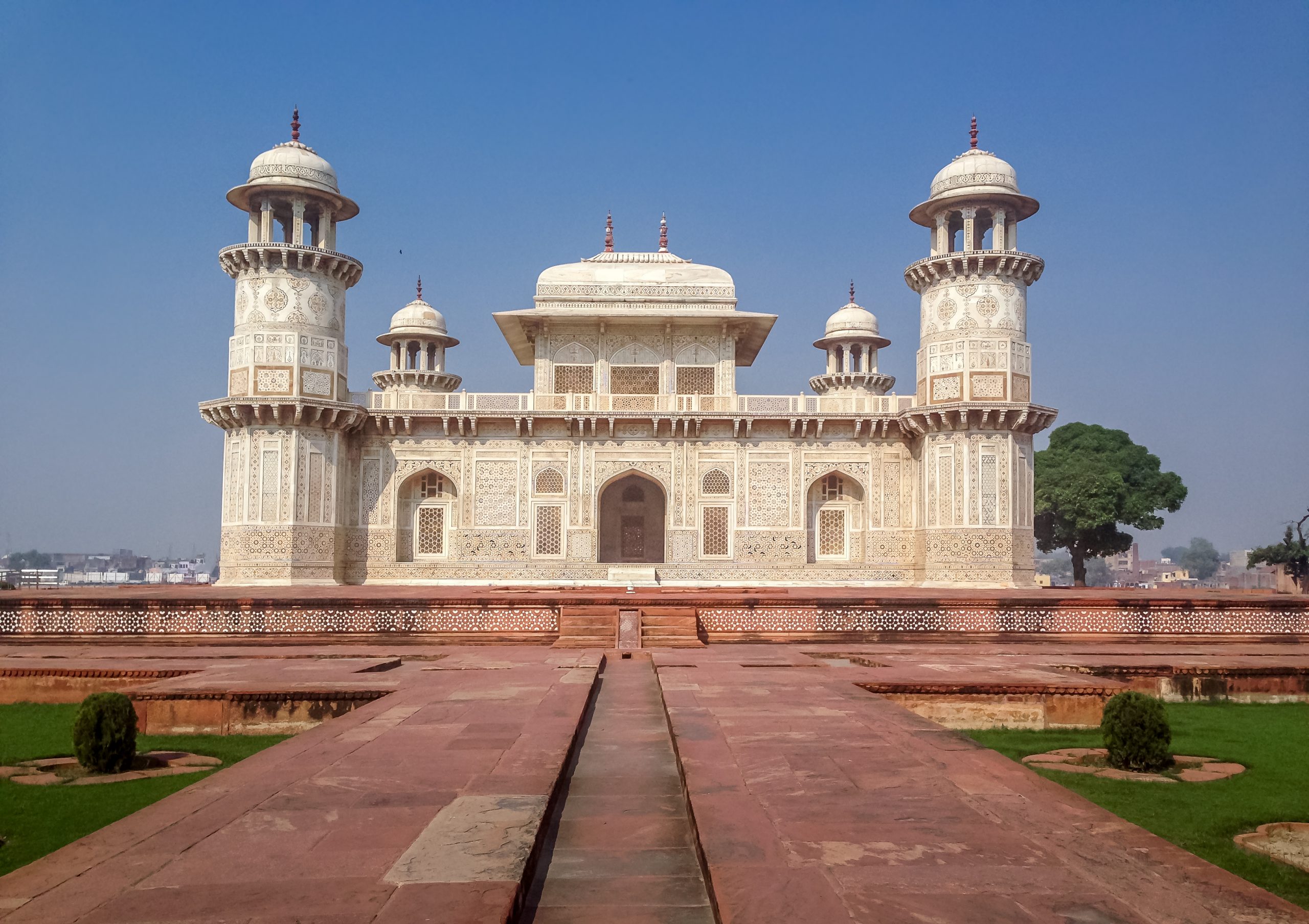
What sets Itmad-ud-Daulah’s Tomb apart isn’t just its history, but its remarkable architectural detail. Often described as a “jewel box” due to its intricate ornamentation, the tomb showcases a level of craftsmanship that feels almost delicate compared to the grander scale of other Mughal monuments in Agra.
Key architectural features include:
- Intricate pietra dura inlay work, using semi-precious stones set into white marble
- Delicate floral motifs and geometric patterns covering nearly every surface
- Four hexagonal towers standing at each corner of the main structure
- A raised platform crafted from red sandstone, providing a striking contrast to the white marble above
- Persian-style gardens surrounding the tomb, intersected by walkways and water channels
This blend of Persian design influence with Mughal craftsmanship creates a visual experience that feels distinctly different from the more massive, symmetrical grandeur of the Taj Mahal, offering visitors a more intimate architectural encounter.
Itmad-ud-Daulah Timings: When to Visit
Knowing Itmad-ud-Daulah timings ahead of your visit helps you plan your day efficiently, especially if you’re combining this stop with other Agra attractions.
The tomb is generally open daily, from sunrise to sunset, with visiting hours typically running from around 6:00 AM to 6:00 PM, though these hours can shift slightly depending on the season. Since exact timings may vary or be updated periodically, it’s a good idea to check current hours closer to your travel date.
For the best experience, early morning visits are highly recommended. Not only does the softer morning light beautifully highlight the marble’s intricate detailing, but the site also tends to be significantly less crowded compared to later in the day, especially when compared to the Taj Mahal itself.
Itmad-ud-Daulah Tickets Price: What to Expect
Planning your visit also means understanding Itmad-ud-Daulah ticket prices, which are refreshingly affordable compared to many other major monuments in Agra.
- Indian, SAARC, and BIMSTEC visitors: Approximately ₹30 per person
- Foreign tourists: Approximately ₹310 per person
- Children below 15 years: Free entry
As ticket prices and entry policies can occasionally be revised, it’s worth confirming current rates through the official Archaeological Survey of India (ASI) website or at the ticket counter before your visit, ensuring you have accurate, up-to-date information.
Best Time of Year to Visit
While the tomb is open year-round, timing your trip around Agra’s seasonal weather patterns can significantly enhance your experience.
- Winter (November to February): The most comfortable season to visit, with cool, pleasant weather ideal for exploring outdoor monuments
- Summer (April to June): Extremely hot, with early morning visits strongly recommended to avoid peak afternoon heat
- Monsoon (July to September): Humid with occasional rainfall, though daytime visits remain manageable with proper planning
Winter mornings, in particular, offer the most pleasant combination of comfortable temperatures and beautiful natural lighting for photography.
How to Reach Itmad-ud-Daulah’s Tomb
Located in the Moti Bagh area near the Yamuna River, Itmad-ud-Daulah Tomb, Agra, is conveniently close to several other major attractions in the city.
- Approximately 4–7 kilometres from the Taj Mahal, roughly a 15–20 minute drive
- Around 5 kilometres from Agra Fort
- Easily accessible by auto-rickshaw, taxi, or private car from most parts of central Agra
Given its proximity to other landmarks, many visitors choose to combine a visit to this tomb with stops at Agra Fort or the Taj Mahal, making for an efficient, well-rounded sightseeing day.
Tips for Visiting Itmad-ud-Daulah’s Tomb
To make the most of your visit, keep the following practical tips in mind:
- Carry valid identification, such as a government-issued ID or passport, as it may be required for entry
- Visit early in the morning for softer lighting, smaller crowds, and cooler temperatures
- Remove your shoes before entering the main mausoleum, as per site customs
- Avoid carrying large bags or food items, since certain restrictions may apply at the entrance
- Allocate 1 to 2 hours to fully explore the tomb, gardens, and surrounding grounds without feeling rushed
Taking these small precautions ensures a smoother, more enjoyable visit, allowing you to focus on appreciating the tomb’s architectural beauty without unnecessary interruptions.
Why Itmad-ud-Daulah’s Tomb Deserves a Spot on Your Agra Itinerary
While the Taj Mahal understandably draws the largest crowds, Itmad-ud-Daulah’s Tomb offers a quieter, equally rewarding experience for travellers interested in Mughal history and architecture. Its intricate detailing, historical significance as a precursor to the Taj Mahal, and peaceful garden setting make it a worthwhile addition to any Agra itinerary, particularly for those looking to explore beyond the city’s most famous landmark.
For visitors planning a comfortable, well-rounded trip, choosing accommodation strategically can make sightseeing significantly easier. Staying at one of the 5-star hotels in Agra ensures convenient access to major attractions like Itmad-ud-Daulah’s Tomb, the Taj Mahal, and Agra Fort, while also providing a relaxing retreat after a day of exploring the city’s rich Mughal heritage.
Read Also – Agra Fort Guide : Agra Fort Ticket Price, Timings, Architecture & More
Your Ideal Stay: Jaypee Palace Hotel & Convention Centre
At Jaypee Palace Hotel, we take pride in offering our guests more than just a place to stay. We offer a true retreat right in the heart of Agra. Set amidst 25 acres of lush, landscaped gardens, our property blends timeless Mughal-inspired architecture with modern luxury, creating a peaceful escape just minutes from the Taj Mahal. Whether you’re here to explore Agra’s rich heritage or simply unwind after a day of sightseeing, we’ve designed every corner of our hotel, from our spacious rooms to our dining experiences, to make your stay comfortable, memorable, and genuinely relaxing.
Conclusion
Itmad-ud-Daulah’s Tomb may not carry the same global fame as the Taj Mahal, but its architectural significance, historical depth, and serene atmosphere make it one of Agra’s most rewarding hidden gems. From its origins as a heartfelt tribute by Empress Nur Jahan to her father, to its role in shaping the marble craftsmanship later perfected in the Taj Mahal, this monument offers a rich, layered story for history enthusiasts and casual travellers alike.
Whether you’re drawn by its intricate pietra dura inlay work, its peaceful Persian-style gardens, or simply its quieter atmosphere compared to Agra’s more crowded landmarks, a visit here adds meaningful depth to any Agra itinerary. By planning around the right timings, understanding ticket pricing, and choosing convenient accommodation nearby, you can experience this beautiful “Baby Taj” without the crowds and without any unnecessary hassle.
For travellers looking to explore Agra’s full Mughal legacy, from grand icons like the Taj Mahal to hidden treasures like Itmad-ud-Daulah’s Tomb, taking the time to visit this often-overlooked monument is well worth the effort, offering a more personal, intimate encounter with the artistry that defined an era.
References
These sources provide authoritative information on the history, architecture and visitor guidelines for Itmad-ud-Daulah’s Tomb.
- Archaeological Survey of India (ASI), Agra Circle. Tomb of Itimad-ud-Daulah: Monument Information, Timings and Entry Fees.
- Uttar Pradesh Tourism, Government of Uttar Pradesh. Itmad-ud-Daulah’s Tomb, Agra.
- Ministry of Tourism, Government of India. Incredible India: Itmad-ud-Daulah’s Tomb.
- Koch, E. (2006). The Complete Taj Mahal and the Riverfront Gardens of Agra. Thames & Hudson.
