

Table of Contents
- What Ram Bagh Agra Was Meant to Be?
- Ram Bagh Location and Setting
- Ram Bagh History Over Time
- Ram Bagh Timings and Daily Rhythm
- Architecture and Water Design
- Ram Bagh and Photography
- Care and Preservation
- Hotels and Resorts Near Ram Bagh
- Walking Through Ram Bagh: What a Visit Feels Like
- Ram Bagh in Today’s Agra
- Conclusion
- FAQs
Agra is usually spoken about in terms of monuments, big structures, long histories and heavy crowds. Yet along the Yamuna, there is a garden that feels quieter in intention. Ram Bagh does not compete for attention. It sits calmly, shaped by time rather than tourism.
Built centuries ago, Ram Bagh Agra is known today as the oldest Mughal garden in India. Its value does not lie in size or decoration. It lies in balance, space and the way it allows visitors to slow down without effort.
What Ram Bagh Agra Was Meant to Be?
Ram Bagh was originally called Aram Bagh, meaning a place of rest. It was created in 1528 by Emperor Babur, long before Agra became a centre of grand Mughal architecture.
As a Mughal garden in Agra, it followed the Charbagh layout with four sections, straight paths and flowing water. Everything is placed with intention, but nothing is exaggerated. The simplicity is what still defines the garden today.
Ram Bagh Location and Setting
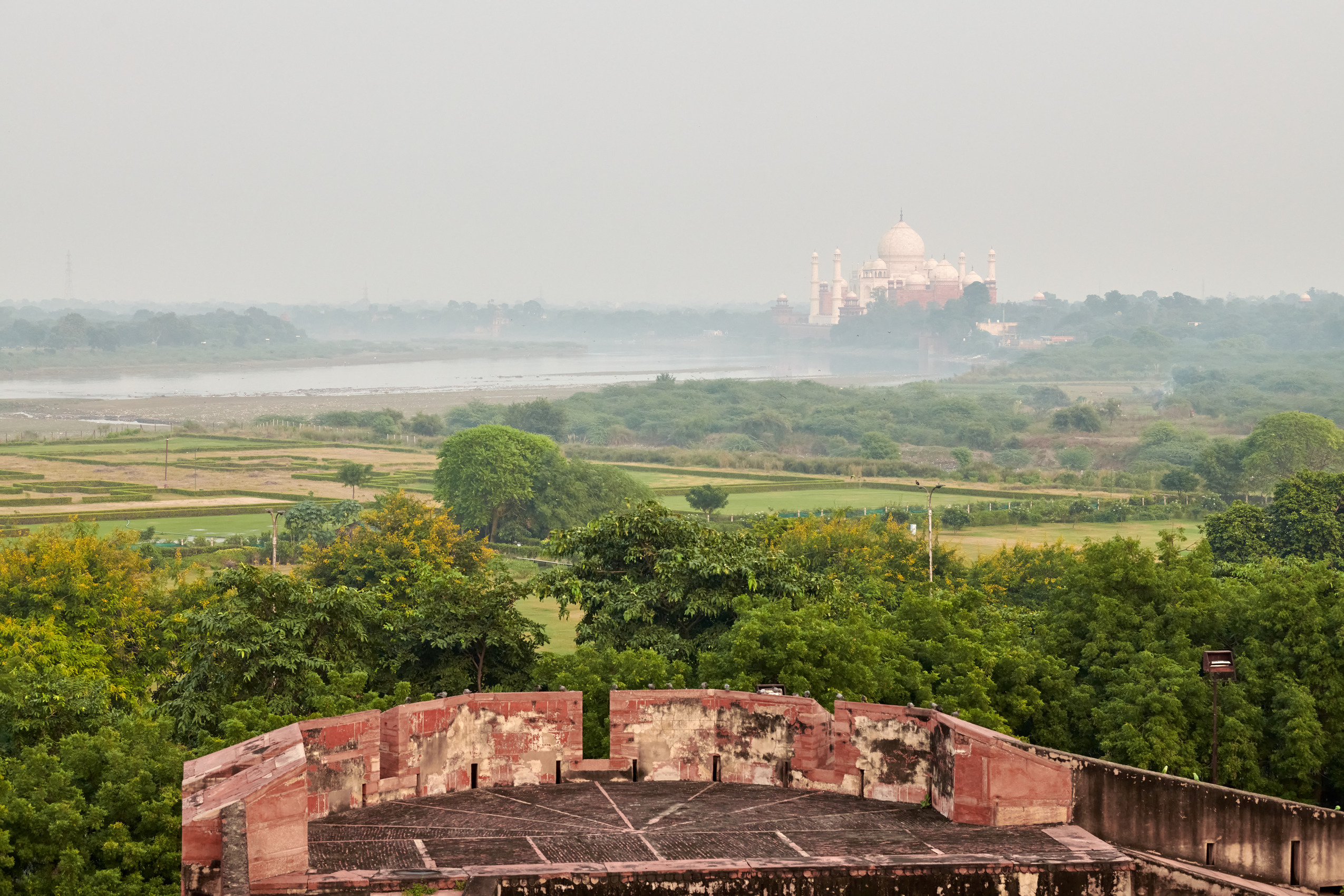
The Ram Bagh location lies on the eastern bank of the Yamuna River. It is around five kilometres from the Taj Mahal and close to Agra Fort.
Despite this, the garden feels detached from the city’s rush. The river, open land, and wide spacing give Ram Bagh Agra a sense of distance, even though it sits within the city’s historical zone.
Ram Bagh History Over Time
The Ram Bagh history is closely linked to Babur’s personal ideas about nature and reflection. After his death, he was buried here briefly before being moved to Kabul.
Later rulers maintained the garden rather than changing it. Akbar repaired it. Jahangir preserved it. Nur Jahan helped refine its upkeep. Because of this continuity, Ram Bagh still carries the spirit of the early Mughal period.
Ram Bagh Timings and Daily Rhythm
The Ram Bagh timings follow daylight hours, opening from sunrise to sunset.
Mornings feel cooler and quieter. Afternoons are warmer, with softer movement. There is no single “best” time. The garden adjusts itself through the day, and visitors tend to do the same.
Architecture and Water Design
Ram Bagh’s design relies more on proportion than ornament. Water channels guide the layout, feeding fountains and greenery.
The Baradari pavilion stands at the centre, built from red sandstone and marble. It offers views in every direction without dominating the space. This restraint is why Ram Bagh remains an important Mughal garden in Agra.
Trees, flowering plants, and shrubs fill the garden without excess. Seasonal flowers appear quietly, adding colour without overwhelming the setting.
Birds move freely near water channels and shaded areas. Their presence adds life, but never noise. This balance gives Ram Bagh its calm character.
Ram Bagh and Photography
Photography here is subtle due to the straight paths, still water and gentle light.
Early mornings and late afternoons usually reveal the garden best. Not dramatic. Just steady. Ram Bagh Agra, photographs well because it does not try to be photographed.
From time to time, Ram Bagh hosts cultural events such as music or literary gatherings. These are usually small and quiet, matching the tone of the place. The garden remains a lived-in space rather than a staged one.
Care and Preservation
Preserving Ram Bagh involves steady, ongoing work.
- Water systems are maintained.
- Pathways are repaired.
- Plant life is monitored.
The aim is not to modernise the garden, but to let it continue as it always has.
Hotels and Resorts Near Ram Bagh
Visitors often choose hotels near Rambagh Agra for convenience. The garden is easy to reach without a long travel.
There are also several comfortable resorts in Agra within driving distance. Staying at resorts in Agra allows Ram Bagh to be visited without pressure or tight scheduling. However, the best place to book your stay near the place in the city is Jaypee Palace Hotel & Convention Centre. The luxurious rooms offer everything you wish for to make your stay comfortable and memorable.
Walking Through Ram Bagh: What a Visit Feels Like
A walk through Ram Bagh does not follow a fixed path in the visitor’s mind, even though the garden itself is carefully planned. People usually enter expecting a quick stop, but the pace changes once inside. Movement slows without effort. The straight paths encourage walking, yet there is no pressure to keep moving. Many visitors stop often, sometimes without realising why.
The sound inside the garden feels muted compared to nearby roads. Water channels soften footsteps. Trees create shaded stretches that make time feel less defined. This is where Ram Bagh Agra differs from more crowded sites. There is no central moment everyone gathers around. Each corner feels similar in tone, which allows the visit to unfold naturally rather than as a sequence of highlights.
Benches and open areas invite pauses. Some people sit briefly. Others walk the same path more than once. The garden does not suggest what should be done next. That absence of direction is part of its character and explains why Ram Bagh often feels more personal than planned.
Among Agra’s landmarks, Ram Bagh feels quieter in every sense. It does not overwhelm. It does not perform. As the oldest Mughal garden in India, it shows where Mughal design began with restraint, space and patience.
Ram Bagh in Today’s Agra
In modern Agra, where tourism often moves quickly, Ram Bagh occupies a different place. It is not part of rushed itineraries or tight schedules. Instead, it quietly exists alongside the city’s larger landmarks. Many visitors reach the garden after seeing the Taj Mahal or Agra Fort, noticing how the mood changes almost immediately.
As the oldest Mughal garden in India, Ram Bagh carries historical weight, yet it does not present itself as fragile or distant. Local residents still use the space for short walks and quiet time. This everyday presence keeps the garden connected to the city rather than isolated from it.
The garden also serves as a reminder that Mughal design was not only about grandeur. Before marble tombs and towering gateways, there were spaces like this- meant for balance, rest, and thought. In that sense, Ram Bagh Agra continues to fulfil its original purpose even today.
Surrounded by growing urban development, the garden’s continued openness feels important. It offers a kind of breathing space within the city. That relevance is what keeps Ram Bagh meaningful, not just as a historical site, but as a place that still fits quietly into daily life.
Also Read : Must See Mughal-Era Monuments of Agra
Conclusion
Ram Bagh Agra remains a place shaped by time rather than trends. Its location, layout, and history offer a softer understanding of Mughal heritage. Whether visiting from nearby hotels near Rambagh Agra, like Jaypee Palace Hotel & Convention Centre or spending time at resorts in Agra, Ram Bagh adds balance to an Agra visit. It is not a highlight. It is a pause.
